Complete Puzzle: Draw One Part
The Fashion ValleyPuzzle
4.784.00 Reviews
- Version
- 1.2.1
- Installs
- 10.00M
- Age Rating
- Everyone
Screenshots
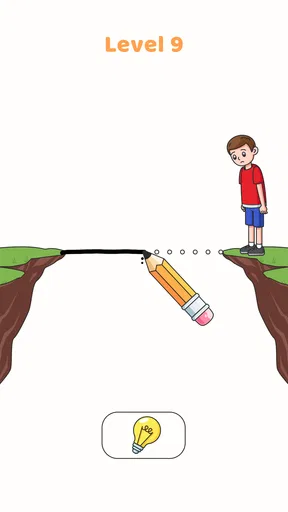
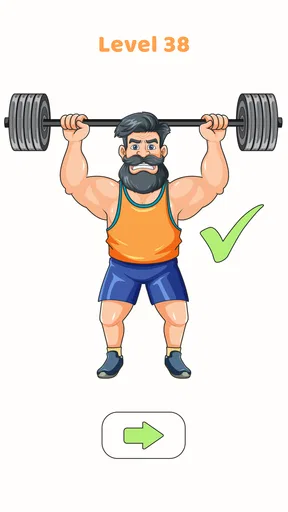
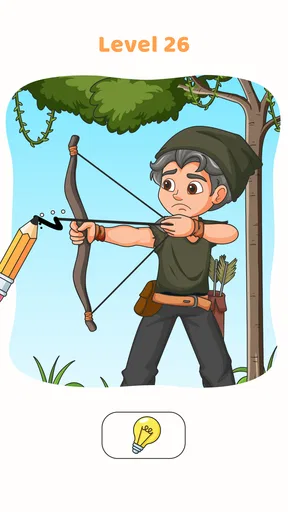
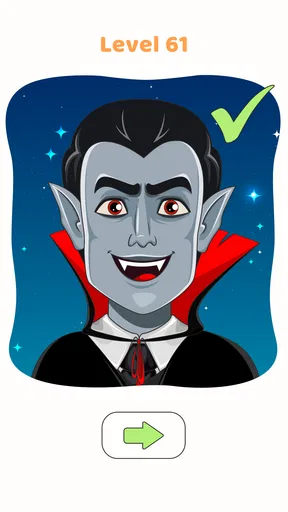
Our Review of Complete Puzzle: Draw One Part
 Analysis by Appyee
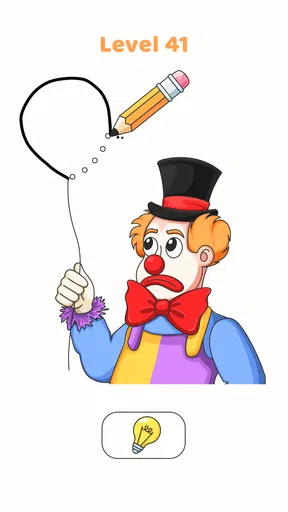
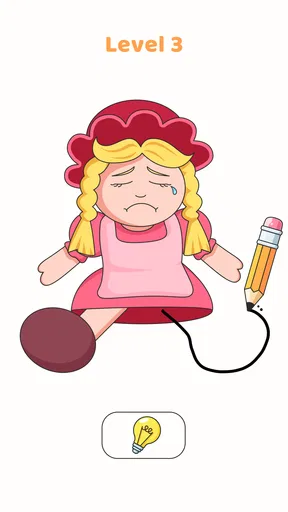
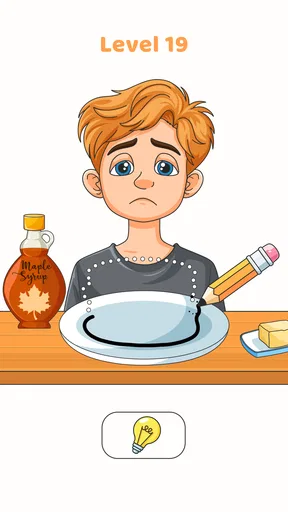
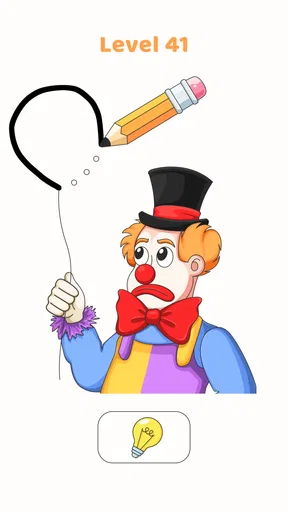
I spent time with Complete Puzzle: Draw One Part to understand whether its central idea stays enjoyable beyond the first few rounds. This is a free puzzle game from The Fashion Valley, built around a simple challenge: look at an incomplete picture, decide what is missing, and draw the other part yourself. That sounds easy, but the interesting part is that the game tests recognition and interpretation at the same time. You are not simply matching pieces or moving objects into place; you are trying to understand the image before making a quick visual answer.
That focus gives the game a different feel from the usual tile-matching or word-based puzzle. It is closer to a small visual riddle that asks you to notice shape, balance, and context. The store summary describes the basic concept, but in use, the appeal comes from the pause before drawing: I often knew what the missing object should be, yet still had to think about where and how to add it. For short breaks, that combination of observation and action works well.
Why the drawing mechanic matters
The strongest capability here is the direct drawing interaction. Instead of choosing from several answers, I have to supply the missing idea with my own finger. That makes each puzzle feel more personal than a standard multiple-choice question. Even when the expected answer is obvious, the act of completing the picture creates a small sense of involvement that a tap on a button would not provide.
This mechanic also changes how I approach a puzzle. In a conventional matching game, I can usually scan for identical colors or shapes. Here, I first ask what the scene is trying to communicate. A partial picture may suggest an object, an action, or a visual detail that makes the whole image understandable. The best moments come when the missing part is not merely decorative but completes the joke or visual meaning of the scene.
That is why I would describe this as a casual visual puzzle rather than a drawing app. The goal is not to produce attractive artwork, and the game does not turn the screen into a blank canvas. Drawing is the answer method, not the final product. This distinction matters for anyone expecting freeform creativity: the experience rewards recognizing the intended solution more than experimenting with artistic styles.
The game’s broad appeal is reflected in its average rating of 4.3 from around 26 thousand ratings, while more than 10 million installs show that the format has reached a large mobile audience. Those figures do not guarantee that every puzzle will suit every player, but they fit my impression of a game designed for quick access. I could understand the basic interaction almost immediately, without needing a long tutorial or a complicated control scheme.
Reading the picture before touching the screen
My most useful habit was to delay drawing for a moment. The first impulse is often to sketch the most obvious object, but the image usually gives clues through position and proportion. I looked at the existing lines, considered what would make the scene feel balanced, and then chose the simplest completion that matched the visual language already on screen.
This small pause makes a real difference. If I drew too quickly, I was more likely to focus on a detail instead of the whole picture. When I treated each level as a visual sentence with one missing word, the intended answer became easier to identify. That approach is especially helpful for younger players, because it turns a vague drawing task into a process of observation and deduction.
Another practical insight is that neatness is less important than clarity. I did not need to draw like an illustrator. A recognizable outline or a sensible mark was more useful than spending time polishing the shape. Players who feel nervous about their drawing ability should not approach this as an art test. The real challenge is deciding what belongs in the empty space.
How the interaction feels in everyday play
The game fits naturally into small gaps in the day. I can imagine opening it while waiting for a drink, taking a few turns during a commute, or using it as a low-pressure break after work. The individual puzzles are conceptually compact, so the game does not demand the kind of uninterrupted attention that a long story-driven title requires. That makes it easier to stop and return later without losing a complicated chain of events.
A realistic use case is a parent handing the phone to a child for a brief, supervised puzzle session. The Everyone content rating makes the game suitable for a broad audience, and the visual premise is easier to understand than text-heavy puzzle formats. An adult can also play alongside the child by asking, “What is missing from this picture?” That turns the game into a conversation about observation rather than simply a way to fill time.
For solo play, I found the best rhythm came from treating mistakes as part of the reasoning process. A wrong idea usually tells me that I am looking at the scene too literally or ignoring its overall balance. I would not call the experience deeply strategic, but it does reward a little patience. The satisfaction is modest and immediate: identify the missing element, draw it, and see the picture make sense.
The current version is 1.1.6, and the game supports devices running Android 8.0 or later. That makes it relevant to people using older compatible phones who want a lightweight puzzle option without moving to a newer device. I would still check the device experience personally before recommending it for a very small screen, because drawing accuracy can depend on how much room the display gives your finger.
A simple method for harder-looking pictures
When a puzzle did not make sense immediately, I used a three-step process. First, I identified the main subject rather than the empty area. Second, I checked whether the existing image suggested symmetry, movement, or a familiar object. Third, I drew the smallest possible addition that completed the idea. This method avoids adding unnecessary details and keeps the answer connected to what is already visible.
There is also a useful distinction between “what would look nice here?” and “what makes this picture complete?” The first question encourages decoration, while the second points toward the intended solution. That difference is easy to overlook, especially for players who enjoy drawing. In this game, restraint is often more effective than creativity without direction.
If I were introducing the game to someone else, I would explain that the finger movement is only the final step. The main work happens while interpreting the image. That explanation sets the right expectation and prevents disappointment from players who want a full sketchbook experience. It also makes the game more interesting for people who normally prefer logic puzzles, because the drawing is supported by visual reasoning rather than replacing it.
Where it works best and where it falls short
The clearest strength is accessibility. The premise is easy to explain, the controls are approachable, and the player can begin solving without learning a large ruleset. This is exactly the kind of design that works when I want a quick mental change of pace instead of a demanding gaming session. The combination of recognition and drawing gives it more personality than a basic “find the missing piece” format.
It is also a good choice for players who enjoy visual humor and simple picture-based challenges. Someone who likes spotting patterns, completing illustrations, or solving light brain teasers will probably understand the appeal quickly. The game can be especially comfortable for people who find word puzzles tiring or who prefer an interaction that communicates through images.
The tradeoff is depth. Because the central action stays focused on completing one missing part, players looking for elaborate systems, character development, competitive rankings, or long-term strategy should choose a different puzzle game. This is not the place for a complex campaign that gradually changes its rules. Its value comes from immediacy, and that same simplicity may limit how long it holds the attention of someone who needs constant novelty.
The drawing mechanic can also create moments of uncertainty. A player may understand the intended answer but wonder how precise the mark needs to be. That can feel less satisfying than selecting a clearly defined tile or entering a word with an exact spelling. I preferred to draw confidently and keep the answer visually simple, but anyone who dislikes interpreting what a puzzle expects may find this less comfortable than a conventional logic format.
Another consideration is the free-to-play model. The game costs nothing to start, while optional in-app purchases range from $1.99 to $8.99 per item. That is worth keeping in mind if you are choosing a game for a child or prefer completely purchase-free entertainment. The presence of optional purchases does not change the core appeal of the drawing concept, but it does mean I would review the purchase settings before handing over a device.
Compared with a traditional jigsaw game, this title is faster and more interpretive. A jigsaw rewards patience, spatial placement, and gradual assembly; this game asks for a quick understanding of the missing idea. Compared with a coloring app, it is more goal-oriented and less expressive. Compared with a word puzzle, it removes spelling from the equation but replaces it with visual interpretation. Those differences make the choice fairly clear: pick this when you want a short picture-based challenge, not a long construction project or an open-ended art tool.
Who should skip it
I would not recommend it as the main game for someone who wants deep progression or a strong sense of mastery over many different mechanics. The central concept is the attraction, so players who quickly exhaust simple visual challenges may prefer a game with layered rules, timed competition, or more demanding problem solving.
I would also be cautious about recommending it to someone who wants complete control over the drawing process. The game’s purpose is to reach the intended picture, not to preserve every creative interpretation. If you enjoy drawing simply for its own sake, a dedicated sketching or coloring app would be a better fit. Here, the drawing is judged by how well it completes the puzzle’s visual idea.
Finally, players who dislike free-to-play games should think about whether optional purchases are acceptable before installing. The entry price is free, which makes trying it easy, but the purchase range means it is not identical to a one-time paid puzzle. That distinction is more important for families than for someone casually testing the game alone.
Who gets the most from this puzzle
The best audience is someone who wants a friendly, low-commitment brain teaser with a hands-on answer. I would recommend it to casual players, families looking for a simple shared activity, and anyone who enjoys visual riddles more than menus full of rules. It is also a reasonable option for a short break because the premise is immediate and the interaction does not require a long setup.
Adults may appreciate it as a way to reset their attention between more demanding tasks. The game asks me to switch from passive scrolling to active observation, but it does not punish me with a complicated learning curve. That makes it useful when I want a small mental challenge without committing to a full gaming session.
Children can benefit from the way it encourages them to describe what they see and explain why a particular drawing belongs in the scene. I would still stay involved when purchases are possible, especially on a shared device. The strongest family use is not leaving the child alone with the screen, but discussing the picture and allowing the child to reason through the answer.
The developer, The Fashion Valley, has kept the concept focused rather than burying it under unrelated mechanics. That focus is both the game’s identity and its main limitation. I found it easier to recommend because I knew exactly what kind of experience I was getting: incomplete visual scenes, a missing idea to discover, and a drawing gesture to finish the thought.
After using it, my advice is simple: try it if the idea of completing pictures with your own finger sounds more appealing than matching tiles or solving clues with words. Start by studying the whole image, draw only what is needed, and do not worry about artistic perfection. If you want a deep puzzle system, a traditional jigsaw, or a genuine drawing workspace, another option will serve you better. But for a free, approachable picture puzzle that turns observation into a quick action, Complete Puzzle: Draw One Part has a clear purpose and delivers it without unnecessary complexity.
Privacy and Permissions
See what permissions an app requests and how it handles your data.
- Wi-Fi connection information
- view Wi-Fi connections
- Other
- view network connections, full network access, control vibration, prevent device from sleeping, Google Play license check
Verdict
Strengths of Complete Puzzle: Draw One Part
- Simple one-touch controls make it easy to start playing immediately.
- Short levels are ideal for quick sessions during breaks or commutes.
- The game encourages observation and creative problem-solving skills.
- Bright, clean visuals keep the puzzles easy to understand.
- Progression gradually introduces more challenging drawing situations.
Limitations of Complete Puzzle: Draw One Part
- Some solutions rely on guessing the intended object or missing detail.
- Repeated puzzle patterns can make later levels feel less surprising.
- Hints may reduce the satisfaction of solving difficult puzzles yourself.
- Ads can interrupt the experience, especially between completed levels.
- Players wanting advanced drawing mechanics may find the gameplay too basic.
Other Releases by The Fashion Valley
View All
Icecream Cone Cupcake Baking
Strategy3.2

Sticker Doll DIY Dressup Diary
Role Playing3.7

Mini Fidget Antistress Games
Casual4.5

Cake Maker DIY: Baking Games
Role Playing4.6
Similar Picks in This Category
View All
Block Blast!
HungryStudio4.8

Braindom: Brain Games Test
Lahana Game Studio4.6

AMAZE!
CrazyLabs LTD4.6

Sudoku - Classic Sudoku Puzzle
Oakever Games4.7

Art Puzzle - Puzzle Games
Easybrain4.8

Amaze GO!
Oakever Games4.9
Frequently Asked Questions
What is Complete Puzzle: Draw One Part?
Complete Puzzle: Draw One Part is a casual drawing puzzle game in which you solve illustrated scenes by adding the missing element. Each level presents an incomplete object, character, or situation, and you must draw the correct part on the screen. The game is designed for short play sessions and combines simple controls with visual problem-solving rather than traditional jigsaw mechanics.
How do you play Complete Puzzle: Draw One Part?
To play, examine the picture carefully and identify what is missing from the scene. Then use your finger to draw the required shape directly on the display. Your drawing does not usually need to be artistically perfect, but it should resemble the missing object closely enough for the game to recognize it. Careful observation and creative thinking are more important than drawing skill.
Is Complete Puzzle: Draw One Part suitable for children?
The game is generally easy to understand and can be suitable for children because it uses straightforward tap-and-draw interactions instead of complicated controls. However, parents should still review the app’s age rating, advertising, and purchase settings before allowing younger players to use it. Some puzzles may also require reading instructions or hints, depending on the version installed.
Does Complete Puzzle: Draw One Part require an internet connection?
Many puzzle levels can typically be played without a constant internet connection, which makes the game convenient for travel or quick offline sessions. Nevertheless, online access may be needed for advertisements, optional rewards, updates, analytics, or in-app features. Because requirements can vary between Android and iOS releases, check the store listing and test the game after installation.
Are there hints, advertisements, or in-app purchases in the game?
Complete Puzzle: Draw One Part may include optional hints to help when a solution is difficult, along with advertisements that appear between levels or after certain actions. Depending on the release, hints or other benefits may also be offered through in-app purchases. Before downloading, review the current store description and configure parental or purchase restrictions if necessary.
Play our best games!


